Playlists · October 23, 2026
Black Party Playlist: Darker, Heavier, and Built to Hold Late
How to program a black party playlist: a heavier end of the house spectrum, slow pressure, and a late phase that holds, grounded in BRCH's Black Party and BLACKOUT.
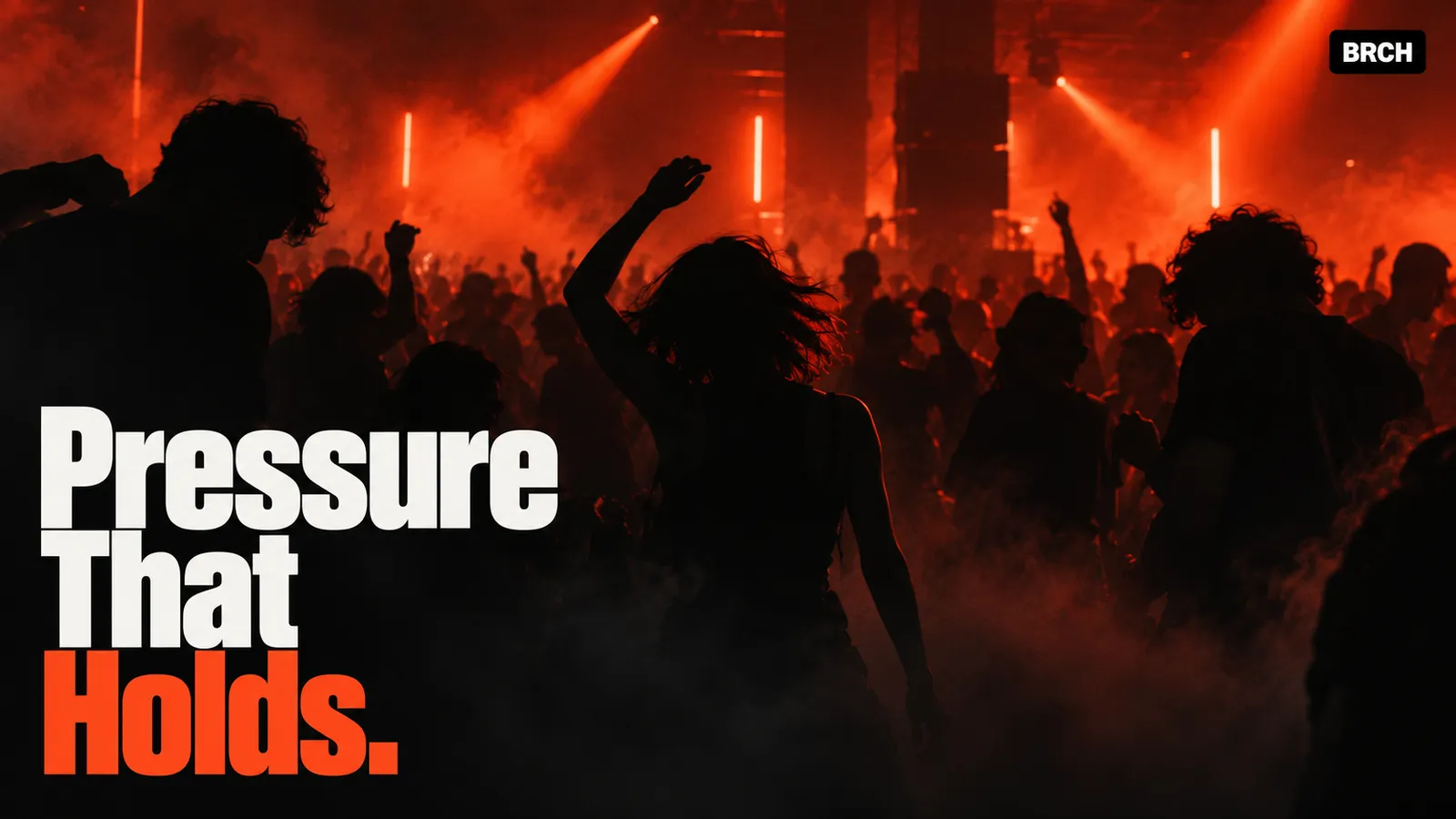
A black party playlist runs heavier than its white party mirror, and this guide programs it later, as advice. BRCH's Black Party hub describes the format as an all-black dress code with darker lighting and a heavier end of the house spectrum, and the Black Party of July 26th 2025 is recorded with immersive lighting, dark aesthetics, and underground sounds. Behind it sits BLACKOUT, Feb 26th 2022, recorded as complete darkness and immersive sound. BRCH's soundtrack data holds three playlists and no black party specific list, so this page claims none. It programs the format from the arc method: pressure built slowly, a peak that earns its weight, and a late phase built to hold. Programming guidance is advice, labelled as advice.
Key Takeaways
- The black format's sound brief is in BRCH's own hub: a heavier end of the house spectrum, matched to a darker room.
- Build pressure slowly. Dark rooms reward patience and punish early peaking harder than bright rooms do.
- BRCH After Hours is the phase model for the landing, read here as deeper, steadier, longer.
- Contrast is the point of the roster: this playlist logic is the deliberate opposite of the bright and vocal brief the companion white party guide draws from its format.
The brief from BRCH's record
Start where the data speaks. BRCH's format hub framing in src/data/formats.ts calls the format the white party's mirror: an all-black dress code, darker lighting, and a heavier end of the house spectrum. The guest facing version is the Black Party explainer. The event record for July 26th 2025 adds underground sounds and a crowd that becomes part of the art. BLACKOUT's record, recapped in the BLACKOUT recap, reduces the same instinct to three phrases: complete darkness, immersive sound, an experimental night.
A playlist brief does not get clearer than that. Heavy end of the spectrum, underground sounds, immersion over interruption. Advice built on that brief: favor tech house drive, deeper basslines, minimal and chopped vocals over big singalong moments, and tracks that gain power from repetition. The house music genres explainer unpacks those branch labels as general knowledge, including the Techno and House borderland listed for Joe Sutcliffe on the BRCH roster.
Build pressure, do not spend it
The arc method in how to build a party playlist applies with one adjustment this guide recommends for a dark format: a longer build phase and a later peak. Advice: open deep and steady, well below the night's eventual intensity, and let the room calibrate to the dark. Guests arriving from bright streets need minutes to become a black party crowd, and the playlist that respects that gets a room that stays.
Raise intensity in small, one way steps. Dark formats forgive almost everything except a peak that arrives before the room has committed, because there is nowhere heavier to go afterward except louder, and louder is not heavier. Keep the single heaviest run in reserve until the room is full, the dress code effect is complete, and the lighting design is doing its full work. That is the moment the hub's phrase, the crowd becomes part of the art, becomes audible as well as visible.
The peak and the late hold
Advice: program the black party peak as weight, not fireworks. A tight run of the heaviest material, mixed long, with minimal breaks, suits a room designed for immersion. Follow it with one record that keeps the darkness but lowers the pressure, a handrail track the room can hold while it breathes.
The late phase is where this format lives longest, and BRCH's data has its model: BRCH After Hours, described as Late night vibes for the after party, profiled on the BRCH After Hours playlist page. Its discipline, as this guide applies it: go deeper and steadier, let tracks run longer, plan a closing track instead of a cutoff. That is black party landing logic exactly. The mirror guide, the white party playlist, lands its night bright and clean on purpose. Two formats, two endings, and the contrast is, in this guide's reading, the roster working as designed. Outfits for this room are covered in what to wear to a black party.
FAQ
Is there an official BRCH Black Party playlist? No. BRCH's soundtrack data lists BRCH Pre-Game, the DANCE HOUSE collab playlist, and BRCH After Hours, none designated for the Black Party. This page programs from the recorded format brief and the arc method.
What does heavier end of the house spectrum mean? It is BRCH's hub phrase for the format's sound: darker, more driving house, which this guide unpacks as tech house drive, deep basslines, and minimal vocals, as general advice.
Was the Black Party connected to BLACKOUT? BRCH's hub calls BLACKOUT the format's darker ancestor: the 2022 experiment in darkness and immersive sound, before the 2025 all-black dress code edition.
How is this different from the white party playlist? Brief and landing. White: bright, vocal, clean landing. Black: heavy, driving, deep late hold. The formats are mirrors in BRCH's own framing, and their playlists should be too.
Sources
- BRCH, src/data/formats.ts: Black Party format hub, including the heavier end of the house spectrum and BLACKOUT ancestor framing, read October 23, 2026.
- BRCH, src/data/events.ts: Black Party record (July 26th 2025) and BLACKOUT record (Feb 26th 2022) with recap text, read October 23, 2026.
- BRCH, src/data/soundtracks.ts: eventSoundtracks entries for the three BRCH playlists, with no black party specific playlist present, read October 23, 2026.