Formats · October 23, 2026
What Is a Disco Party? Mirror Balls, Four on the Floor, and the Original Dress-Up Dance Format
A disco party explainer: the 1970s format that invented the modern dress-up dance night, its music, its dress code, and how it connects to the house music BRCH runs on.
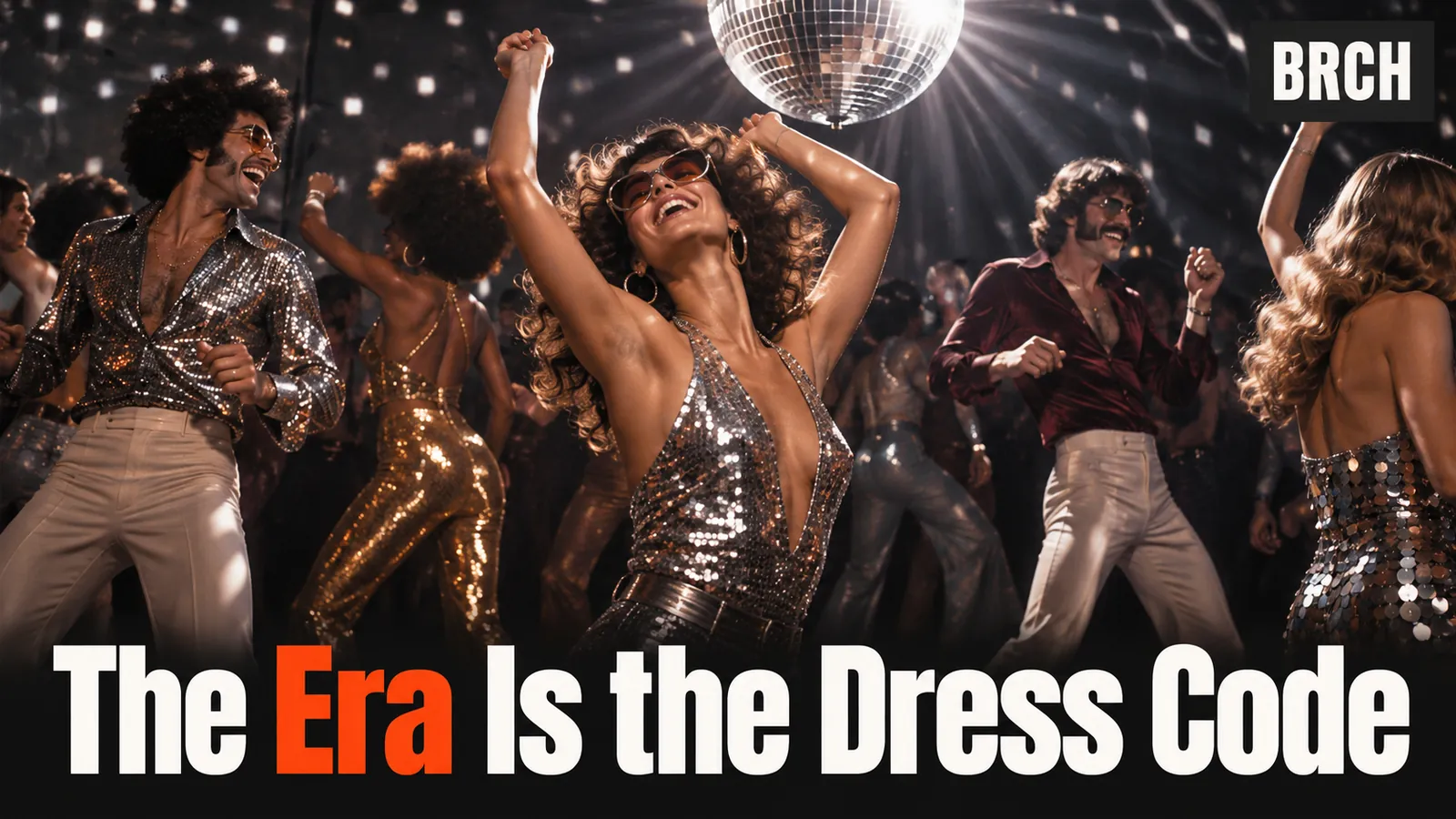
A disco party is a themed dance night built on 1970s disco: mirror ball light, sequins and platforms on the guests, and a soundtrack of orchestral, joyful, four on the floor records. It is the ancestor format of the modern themed party. BRCH's dress code nights and house programming both descend from it, since house music itself grew out of disco. This explainer covers the format, the music, and the look. BRCH's record holds no disco edition, so none is claimed.
Key Takeaways
- Disco is the original dress-up dance format: one era, one sound, one look, and the whole room commits.
- The music is joyful and vocal: strings, horns, and choruses built for group singing and dancing.
- The dress code is shine forward: sequins, metallics, bell bottoms, and platforms, per the style guides sampled for this post.
- House music, BRCH's core sound per its city data, is disco's direct descendant, which is why disco records still work inside house nights.
The format
A disco party asks guests to time travel together. The room dresses as the seventies, the lighting throws mirror ball spots across everything, and the DJ plays the era's dance records and their modern descendants. Like every format in the BRCH what-is-a series, the power is in the single shared instruction. Disco's instruction just happens to be fifty years old and universally understood: shine, flares, and dancing.
That age is an advantage. Guests who freeze at an unfamiliar theme know exactly what a disco party wants, and the costume barrier is low: one sequined top or one pair of flares satisfies the brief. The parties sampled in this post's research build the room from the same kit everywhere: mirror balls, metallic streamers, colored light, and a dance floor treated as the main event rather than background.
The music
Classic disco is orchestral dance music: full string sections, horn lines, piano, and singers front and center over a steady four on the floor kick. The repertoire the guides sampled agree on runs through the Bee Gees, Donna Summer, Chic, ABBA, Earth Wind and Fire, and Gloria Gaynor, with modern disco influenced records from Daft Punk and others extending the same feel. The house music genres explainer traces what happened next: DJs in Chicago took disco records, stripped them down, and built house, the sound BRCH's events run on per its city data and its roster's Electronic and House genre tags.
Programming advice: a disco night peaks early and often, because the records are short, vocal, and built as singles. The arc method from how to build a party playlist still applies, but the build can be faster and the peak longer than a house night's.
The look
The style guides sampled describe a consistent dress code: sequined and metallic tops, bell bottoms and flared trousers, jumpsuits and wrap dresses, platform shoes, gold chains, and big sunglasses. The companion guide on what to wear to a disco party builds outfits in detail. The craft point is the one BRCH's color party outfit guide teaches: commit to the brief with one strong statement and let the room's shared shine do the rest.
FAQ
How is a disco party different from a normal club night? The theme is total: era specific music, dress, and decor, with guests as part of the production. A club night programs music. A disco party programs a decade.
Do I need a full costume for a disco party? No. One strong signal, sequins, flares, or platforms, satisfies the brief. The style coverage sampled treats single statement pieces as the standard guest solution.
Why does disco still work at house parties? Because house music descends from disco directly. The tempos, the four on the floor kick, and the vocal joy are shared DNA, so disco records slot into house programming without breaking the room.
Has BRCH run a disco party? No disco edition appears in BRCH's event record or format hubs, so this explainer claims none. It covers the format as the ancestor of BRCH's own formats.
Sources
- BRCH, src/data/cities.ts: city scene text (BRCH events run on electronic and house music), read October 23, 2026.
- BRCH, src/data/artists.ts: roster genre fields (Electronic and House), read October 23, 2026.
- Web research, October 23, 2026: disco party and seventies style guides (mirror balls, sequins, platforms, bell bottoms, classic disco repertoire and modern disco influenced records) used for general format facts only.