Guides · October 23, 2026
How to Host a Silent Disco: Equipment, Channels, and the Return Table That Saves the Night
A practical hosting guide for silent discos: headphone counts, channel programming, range testing, distribution and returns, and the run sheet.
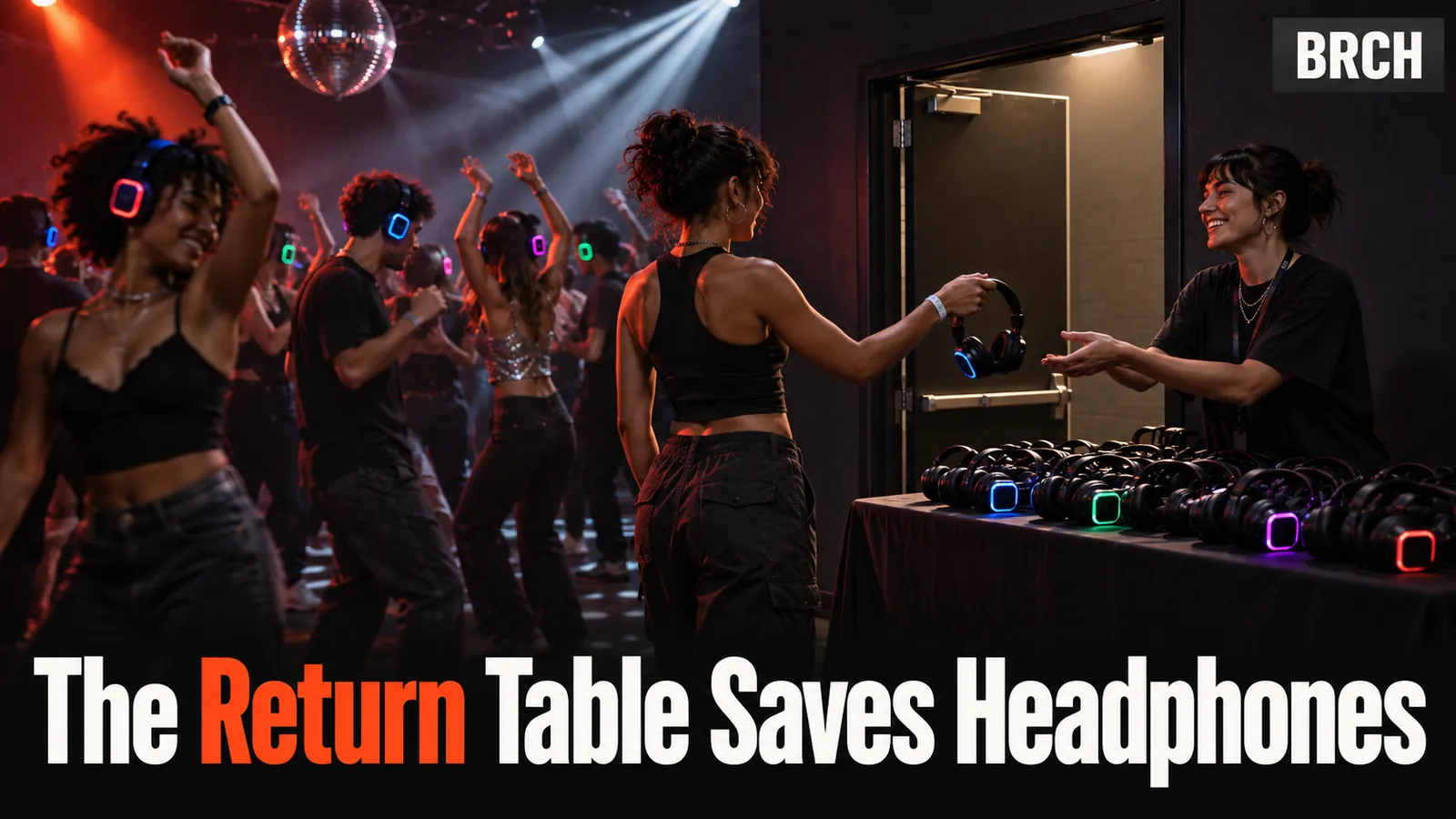
Hosting a silent disco is an equipment operation with a party attached. The music is the easy half. The night succeeds on headphone counts, charged batteries, tested transmitter range, a staffed distribution table, and a return system that gets every set back. Program the channels like a BRCH night, one crowd pleasing channel, one specialist channel, and shared peak moments on the main channel. This guide is the run sheet. All guidance is advice, labelled as advice.
Key Takeaways
- Order headphones for your confirmed list plus a small buffer, and charge every set the day before.
- Test transmitter range in the actual space, in every corner guests can reach, before doors.
- Staff the return table like a coat check. The format's losses happen at the exit, in the last twenty minutes.
- Program channels with distinct jobs, and synchronize one shared peak moment on the main channel.
Equipment: the real guest list
Advice: the planning guides sampled for this post agree on the kit list: a multi channel transmitter per audio source, one device or DJ feed per channel, headphones matched to the transmitter system, charging capacity for the full stock, and spare sets for failures. Rent for a one off, buy only if the format repeats. Test the full chain in the venue, not at home: walk the farthest corners with a set on, because range and interference are properties of the room, as the hosting coverage sampled stresses.
Build the headphone count from the confirmed guest list, not the hoped one, and keep the distribution table between the door and the dance floor so every guest passes it exactly once on the way in.
Channel programming
Advice: give the channels jobs, not just genres. Channel one is the room's shared soundtrack: familiar, vocal, peak capable, programmed as an arc per how to build a party playlist. Channel two is the specialist bet: the genre your crowd argues about, tech house against disco, throwbacks against current. Channel three, if you run it, is the wildcard: requests, a guest DJ, or the BRCH Pre-Game style build list early and the BRCH After Hours style hold list late.
Announce one shared moment in advance, a countdown, a group song, a final track, and put it on channel one. The explainer on what is a silent disco explains why: channels give freedom, peaks need unity, and a host can schedule unity without removing the freedom.
The run of the night
Advice, as a run sheet. Before doors: transmitters placed high and central, range walked, headphones charged, numbered, and laid out, signage for channel switching at the distribution table, one staff member briefed on nothing but headphone problems. At doors: a thirty second demo for the first guests sets the norm, how to switch, how to control volume, where returns happen. During the night: watch the channel lights to read the room, and let the specialist channel DJ see the battle they are winning or losing.
At close: the return table becomes the exit. Staff it with your most patient person, check sets in against the list, and have a small deposit or ID hold system agreed in the invitation if the equipment is rented. The planning guides sampled are blunt that a secure, staffed return area is what separates a profitable silent disco from an expensive one.
Fitting the format to BRCH style crowds
A silent disco suits the BRCH crowd's habits in one specific way: it is a format with a visible commitment signal. The channel lights are a dress code made of light. Hosts can use that playfully, a first hour where one channel is the home team, without changing the format's nature. What it cannot do is replace the shared roar of BRCH's core formats, the White Party peak where one room sings one song. Treat it as a distinct format in the roster sense, ranked on its own terms the way BRCH formats ranked ranks each format by what it does best.
FAQ
How many headphones do I need? One per guest plus a small buffer for failures and late additions. The count comes from the confirmed list. Every guide sampled for this post builds the count the same way.
What does the DJ setup look like? One feed per channel into its own transmitter. A DJ, a laptop, or a phone can each feed a channel. Test every feed through actual headphones before doors.
How do I stop headphones walking away? A staffed return table at the only exit, a check in list, and a hold system (deposit or ID) stated in the invitation. Losses concentrate in the last twenty minutes, so staff the close like the opening.
What BRCH facts does this guide rest on? Almost none, honestly stated: BRCH has run no silent disco in its record. The BRCH material here is programming craft from its playlist pages. Equipment guidance rests on the hosting guides sampled, cited below.
Sources
- BRCH, src/data/soundtracks.ts: eventSoundtracks entries for BRCH Pre-Game and BRCH After Hours, read October 23, 2026.
- Web research, October 23, 2026: silent disco hosting guides (rental kits sized to guest counts, overnight charging, transmitter range testing in the venue, staffed distribution and return checklists) used for general hosting facts only.