Formats · October 23, 2026
What Is a Silent Disco? Headphones, Channels, and a Dance Floor Only You Can Hear
A silent disco explainer: how wireless headphone parties work, why multiple channels change the social math of a room, and where the format fits in party culture.
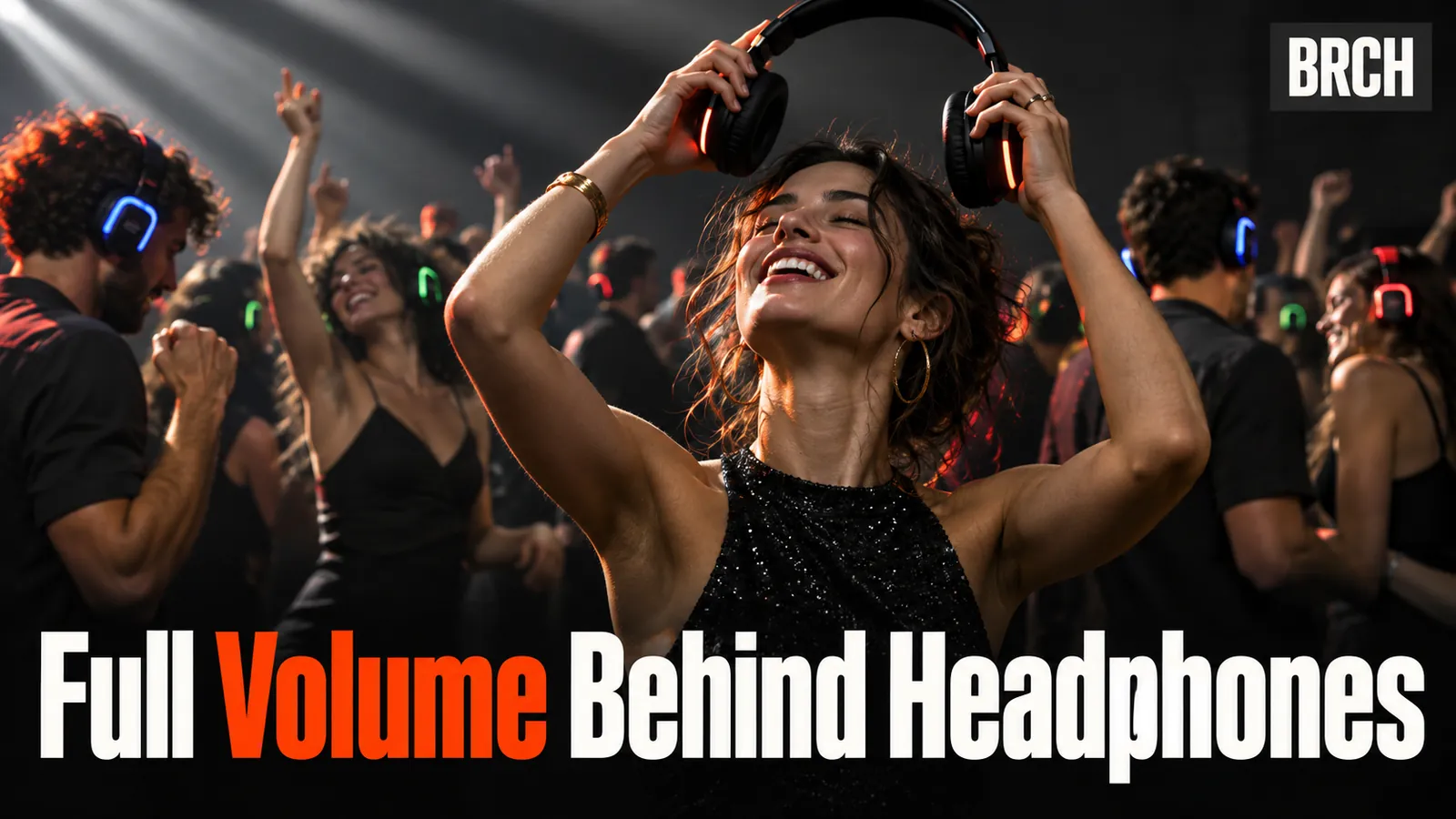
A silent disco is a dance party where the music plays through wireless headphones instead of speakers. Guests switch between two or three channels, often different DJs or playlists, and the room stays quiet to anyone without headphones. The format trades the shared roar of a speaker stack for choice, conversation without shouting, and parties in places where amplified sound cannot go. This explainer covers how it works and what it feels like. BRCH's record holds no silent disco edition, so none is claimed.
Key Takeaways
- The music lives in the headphones: wireless sets fed by transmitters, one per channel, per the format guides sampled for this post.
- Channels are the format's twist: two or three simultaneous soundtracks, and the crowd visibly splits by headphone color or light.
- Conversation is the hidden feature. Take the headphones off and the room is quiet enough to talk.
- The format suits noise sensitive settings and late hours, which is why it appears at festivals, museums, and outdoor events in the coverage sampled.
How it works
A silent disco replaces the PA with three pieces of equipment: transmitters connected to each music source, a stock of wireless headphones, and a distribution point where guests collect and return them. The planning guides sampled for this post describe the standard setup consistently: one audio source per channel, headphones charged and tested in advance, a staffed check in and return table, and signage explaining channel switching and volume controls.
The guest experience is simple. Put the headphones on and choose a channel. Switch when the other channel looks like more fun, which you can judge by watching which color the dancing crowd is wearing. Take the headphones off to talk, order, or step outside, and the party's sound simply stops existing for you.
Why channels change the room
A normal format gives the room one soundtrack and asks everyone to commit to it, the way a BRCH dress code asks everyone to commit to one color. A silent disco gives the room two or three soundtracks and lets commitment be personal and changeable. The social effects are real. The channel battle becomes the night's game, with DJs competing visibly for the crowd. Guests curate their own arc instead of receiving one, which inverts the programming craft in how to build a party playlist: the arc still exists, but each guest assembles it live.
The cost of that freedom is the shared peak. A room cannot peak together on three different songs. Hosts who understand the trade use one channel for the big shared moments and let the others be the alternatives.
Where the format fits
The coverage sampled positions silent discos where speakers cannot go: outdoor spaces with noise limits, late night extensions, multi genre crowds, and venues that host talking and dancing in the same room. For a BRCH reader, the honest comparison is with the after hours phase: both formats lower the room's volume to hold people longer. The silent disco does it with technology. The after hours does it with programming.
Advice: as a guest, treat the headphones gently, keep track of your set, and return it through the checkout you received it from. The distribution system is the format's fragile point, and the planning guides sampled stress staffed returns and checklists for a reason.
The hosting version
Running one is a logistics format more than a music format: headphone counts, charging, transmitter range testing across the whole space, and a return system that survives the end of the night rush. The companion guide, how to host a silent disco, covers the full run sheet.
FAQ
Does everyone hear the same music at a silent disco? No. Guests choose between channels and switch freely. At any moment the room is dancing to two or three different soundtracks at once.
Can you talk at a silent disco? Yes, and it is the format's signature pleasure. Remove the headphones and the room is quiet. Conversation happens at normal volume a meter from the dance floor.
Why do the headphones light up? In multi channel systems the lights show which channel each guest is hearing, which turns the channel battle into a visible game for guests and DJs alike, per the format coverage sampled.
Has BRCH run a silent disco? No silent disco appears in BRCH's format hubs or event record, so this explainer claims none. It covers the format as party culture, in the same series as what is a day party.
Sources
- BRCH, src/data/formats.ts and src/data/soundtracks.ts: format hubs and soundtrack data, read October 23, 2026.
- Web research, October 23, 2026: silent disco planning guides (multi channel transmitters, one source per channel, headphone distribution and staffed return systems, noise sensitive venue use) used for general format facts only. No BRCH claim rests on them.